Market Insight – Issue 03
Saleyards
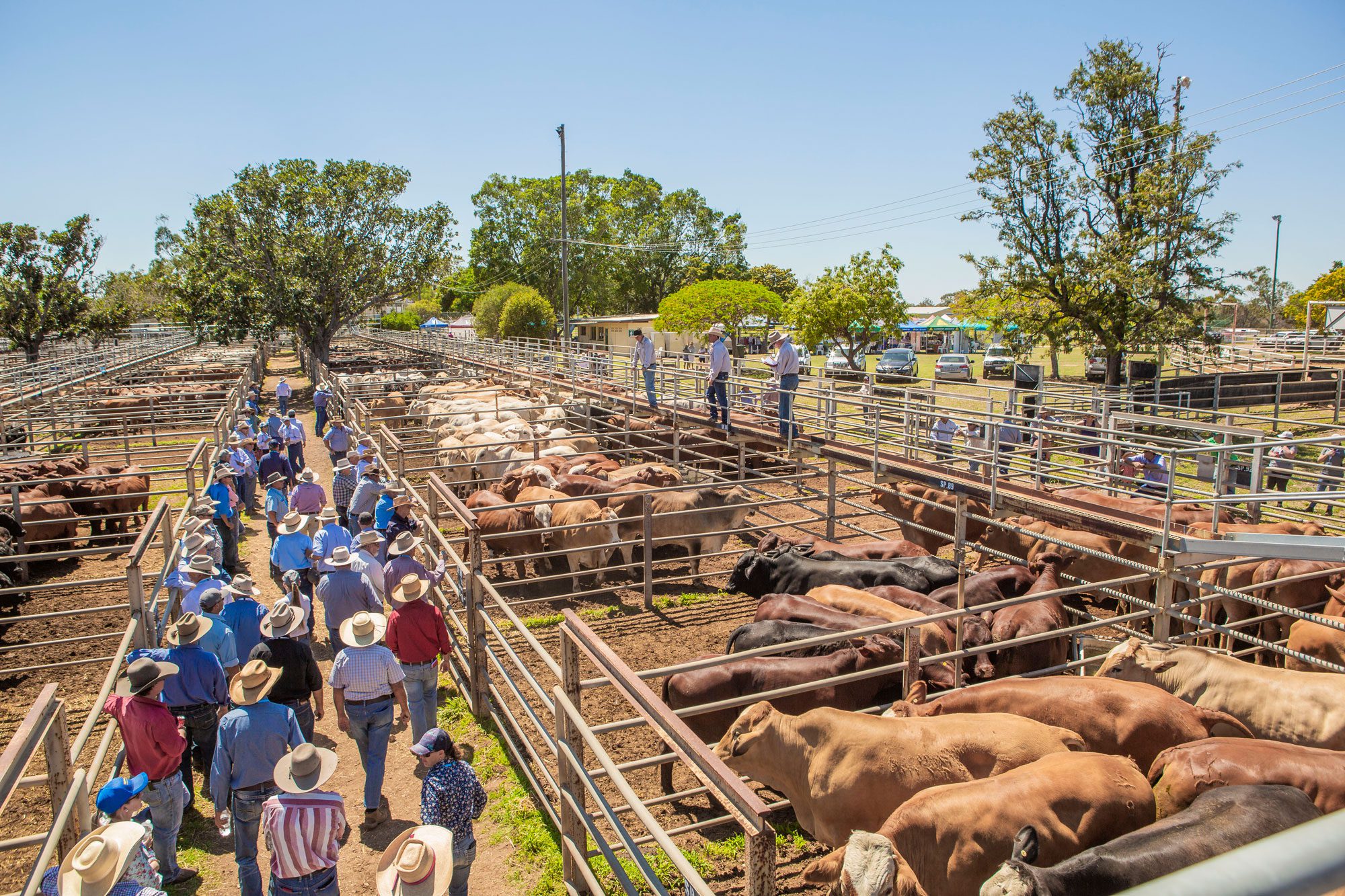
Over the past month, more widespread rainfall across the region has resulted in two cancelled Emerald sales and one cancelled Clermont sale. Despite these disruptions, a steady supply of livestock has continued to come to market in Central Queensland, with 7,891 head offered through the Emerald and Clermont saleyards.
As seen in earlier sales this year, buyer competition has remained strong across both prime and store categories.
Message from the Team
The past few weeks have been a reminder of how much our industry is shaped by the seasons, with recent weather impacting sales across the region. While it meant we weren’t able to bring you our usual update, it also highlighted the resilience and adaptability of our local producers and community.
Moving forward, we’ll be transitioning to a monthly newsletter allowing us to bring you more meaningful updates, stories and insights from across our region.
As always, we’re proud to share the stories behind the people and businesses that make our community what it is. If there’s someone you think we should feature, we’d love to hear from you.
Upcoming Sales
Clermont Prime & Store Sale
Tuesday 24th March 2026
Emerald Prime & Store Sale
Thursday 26th March 2026
Emerald Prime & Store Sale
Thursday 9th April 2026
Market Insight – Continued
The local Central Queensland market continues to show solid momentum and remains well balanced, with saleyard prices holding firm and week-to-week fluctuations are largely quality driven. Yardings over the past month have been more heavily weighted towards prime cattle, although some larger runs of weaner and backgrounder steers and heifers have begun to reappear in recent sales.
AuctionsPlus
Over the past month, 915 head have been offered from Central Queensland through the AuctionsPlus weekly weaner and yearling sale. Of these, 310 head were steers, predominantly heavier backgrounder types averaging 320kg, selling to an average of 8% over reserve with a 100% clearance rate.
The remaining 605 head were heifers, ranging from weaners through to feeder weights, achieving an average of 11% over reserve and also recording a 100% clearance rate.
Private Treaty
Private treaty and direct consignment cattle numbers have increased over the past month, with some producers able to move stock, while others remain restricted due to ongoing wet weather. Cattle coming to market are generally presenting well, with weights often higher than expected off the back of the recent season.
Feeder prices have eased slightly in some areas, however well-presented, quality cattle continue to attract strong competition. Demand for weaner and backgrounder steers and heifers remains solid locally. Opportunities to access premium markets for prime cattle are available and may be easier to qualify for than thought.
Market Opportunities
Control the Controllables: While factors such as fuel, politics and global events remain outside our control, outcomes are still influenced by decisions within individual operations.
Saleyards continue to return strong prices across most categories and, in many cases, assist in managing increasing freight costs.
Premium markets remain accessible for suitable lines, with some cattle meeting specifications not currently being utilised.
Market Indicators
90CL (AU c/kg): 1154 – NC
A$ / US: 70.87c – 0.02c
Livestock Indicators
EYCI (CW): 864 – 11
Feeder Steer: 484 +20
Heavy Steer: 454 +17
Medium Cow: 375 +21
Property Spotlight
Jayree, Clermont QLD
“Jayree” | 50.2ha | Clermont
We’re pleased to present “Jayree” to the market, a well-improved 50.2ha rural property positioned just 9km from Clermont, complete with mail delivery and school bus service. Featuring creek frontage, scenic views, secure water and established infrastructure, “Jayree” offers a balanced lifestyle property with the improvements already in place.
Property Highlights
Home: 4-bedroom brick home with pool and scenic views
Water: Dam, bore, town water and rainwater storage
Power: Solar, generator backup and mains power
Sheds: 24x12m powered shed and additional double bay lock up shed at the yards
Cattle facilities: Functional cattle yards, 5 paddocks and laneway
Country: Fertile creek flats with established buffel
Held by the same family for 36 years, this is a rare opportunity to secure well improved lifestyle property.
For Sale via Public Auction
Friday, 10th April 2026
Full Information Memorandum available.
For further details or to arrange an inspection contact:
Jake Passfield: 0488 588 044
Jack Ward: 0428 305 465
Producer / Rural Business Spotlight
Alissa Herman – Golden Triangle Ag
Securing finance for a rural property can feel complex, particularly in a changing interest rate environment. Across our region, we’re seeing strong interest in rural properties, whether it’s buyers entering the market or families looking to expand.
Understanding how lenders assess rural finance has never been more important, which is why we spoke with Alissa Herman, rural finance specialist at Golden Triangle Finance Group, who works closely with producers across regional Queensland to structure finance for property purchases and business growth.
Alissa works closely with rural families and agribusinesses to navigate the lending process, whether that’s purchasing property, expanding operations, or restructuring existing debt.
“What drew me to rural finance is the people,” she says.
“I’m from rural property myself and have always felt the pull to rural people and families. Rural businesses are resilient, and every operation is different. I enjoy helping families structure their finance in a way that supports their long-term goals.”
When it comes to the current lending environment, despite ongoing conversations around interest rates, lenders remain broadly supportive of the agricultural sector.
“Agriculture has proven to be a resilient industry, and most major banks have dedicated agribusiness divisions that understand how rural businesses operate,” Alissa explains.
That said, there has been a shift in how banks assess applications. Lenders are now taking a more detailed approach, with a stronger focus on cashflow where it once was largely about equity.
“As a finance broker it amazes me to see how some banks will decline a deal and another bank will approve the same transaction, there can be huge variance across a banks credit appetite.”
For those looking at properties in the $1.5 million to $3.5 million range, a common price bracket for many entry-level blocks lenders are typically focused on three key areas: equity, cashflow and experience.
If the asset is less than 50ha with a house, some lenders may treat the purchase as a home loan, which can require as little as a 10% deposit. If the property is greater than 50ha, the standard deposit generally sits around 30–40%, which can be made up of cash or equity in existing properties.
Cashflow is equally important. Lenders need to see that both the business and any off-farm income can comfortably service the debt, even during less favourable seasons. Experience also plays a key role, particularly for buyers stepping into larger operations, with lenders wanting confidence that the borrower has the skills and capability to manage the property successfully.
Preparation can make a significant difference when applying for rural finance.
“Having your financial information organised before approaching a lender helps speed up the process and gives the bank confidence in how the business is being managed,” Alissa says.
Typically, lenders will want to see recent financial statements and tax returns, a clear asset and liability position, and an understanding of how the new property will fit within the existing operation. Cashflow forecasts are also essential.
Realistic forecasting is particularly important. Often, clients put forward conservative cashflow figures, but once assessed and further sensitised by the bank, this can create a shortfall and lead to the application being declined.
Business plans, budgets and forecasts are becoming increasingly important, particularly when expanding or taking on larger levels of debt.
“A strong plan helps the bank understand how the property will perform and how the debt will be serviced.”
One of the most common mistakes seen is buyers starting their property search before understanding their borrowing capacity.
“People often fall in love with a property before speaking with their lender,” she says.
“Knowing what you can comfortably borrow before you start looking can save a lot of frustration.”
Another common issue is underestimating working capital.
“Purchasing the land is only one part of the equation. Buyers also need to consider livestock, plant, operating costs and seasonal buffers.”
“We see underfunding in succession planning and property purchases all the time — families never quite get enough money to fully develop and stock the property, they are always chasing their tails.”
Stepping into or expanding within a larger operation also brings additional considerations.
“Running a commercial rural property involves managing seasonal risk, cashflow and capital investment,” Alissa explains.
“Building a strong advisory team — including your accountant, broker and agent — can make a big difference.”
When expanding, lenders will assess how the new property strengthens the overall business, ideally improving efficiency, increasing carrying capacity, or enhancing long-term viability.
When it comes to structuring rural finance, there are several options depending on the business and individual preferences.
Some producers choose to split their loans between fixed and variable rates to manage interest rate risk, while others prefer the flexibility of fully variable lending. Loan structures can include term loans for land purchases, separate facilities for livestock or equipment, and interest-only periods during expansion phases.
“A well-structured lending facility provides flexibility and helps producers manage seasonal fluctuations,” Alissa says.
Looking ahead, for those considering purchasing property in the next 12 to 24 months, early preparation is key.
“Speak with your finance broker well before you start looking at properties,” Alissa advises.
“Small adjustments made today can significantly improve borrowing capacity later.”
Her final advice for producers looking to grow their business over the long term is simple.
1. Don’t take on unnecessary equipment finances — these loan commitments can really limit the banks’ ability to support you into the next property.
2. Understand your family’s long-term goals. When opportunities arise, having clarity around your goals allows you to quickly assess whether the investment aligns with your plans. This helps reduce procrastination and prevents pursuing opportunities that may not ultimately support your family’s long-term direction.
“Agriculture is a long game. The most successful businesses are those that understand their numbers, manage risk carefully and take opportunities when the timing is right.”
Email: alissa@goldentriangleag.com.au
Phone: 0459621902