Market Insight – Issue 01
Saleyards
Saleyards across the region opened 2026 on a solid note. Clermont and Emerald both recorded firm prices in line with where markets closed late last year. Cattle numbers were strong for this time of year. Buyer attendance was consistent, and competition remained sound across both prime and store categories.
Prime cattle were well supported, while the store market continued to reward well-presented quality lines. Overall, seasonal conditions and solid demand have provided a positive start to the year.
Message from the Team
Welcome to our first Hoch & Wilkinson Fortnightly Newsletter.
This newsletter is a way for us to share current information from across the livestock and rural property markets, including recent Clermont and Emerald sale results, broader market activity, and relevant industry insight.
Each edition will feature a rural business or producer taking a forward-thinking approach, sharing practical insight and experiences.
Upcoming Sales
Clermont Prime & Store Sale
Tuesday 3rd January 2026
Emerald Prime & Store Sale
Thursday 5th January 2026
Clermont Prime & Store Sale
Tuesday 10th January 2026
Emerald Prime & Store Sale
Thursday 12th January 2026
Market Insight – Continued
AuctionsPlus
There were no cattle offered on last Friday’s weekly yearling and weaner sale that were from the Central Queensland area. Cattle listed were predominantly from Southern Queensland and into New South Wales and Victoria, regions that are currently experiencing drier than normal conditions.
These cattle experienced slightly softer prices and clearance rates overall, however the trend of good quality, well-marketed lines of cattle receiving a premium continued in the A+ platform.
In the Eastern States Sale we saw limited numbers of PTIC cows and cow and calf units in Western and Central Queensland. Well-presented quality articles were met with strong prices.
Private Treaty
Private sales of local store cattle have been limited this year, largely due to wet conditions being experienced locally. However, transactions that have occurred have returned very strong results, with high demand for re-stocker steers and heifers locally off the back of good rainfall and improving pasture conditions.
Locally, feeder steer and heifer private sales have also been somewhat limited. Direct consignment prices on the Downs and southern feedlots have softened in recent weeks due to dry conditions in the south and there being a high volume of feeders coming onto the market.
Local Central Queensland feedlots, however, are not experiencing this volume of cattle. Opportunities remain to achieve similar rates for feeders to where the market closed last year.
Market Opportunities
Saleyards continue to present a strong option for marketing prime cattle.
For store cattle, saleyards, private treaty or AuctionsPlus sales would all be well worth considering and are all bringing their premiums when targeted correctly. It comes down to breed, weight, numbers and what style of sale suits you and your business best.
Local demand for cows and calves is currently lower, and these categories generally represent good value for purchasers.
Understanding the current market value of cattle on hand, along with carrying costs, remains important when assessing opportunities to sell, trade, or replace stock. The H&W team can assist with these calculations and provide clarity around current market settings.
The H&W Team is Currently Sourcing the Following Lines of Cattle
Feeder steers: 400–520kg, up to 75% Brahman content
Brahman feeder heifers: 380–480kg, PTE preferred
Backgrounder / weaner steers: 240–320kg, all breeds considered
Backgrounder heifers: 220–280kg, flatback only
Cows and calves: all quality and numbers considered
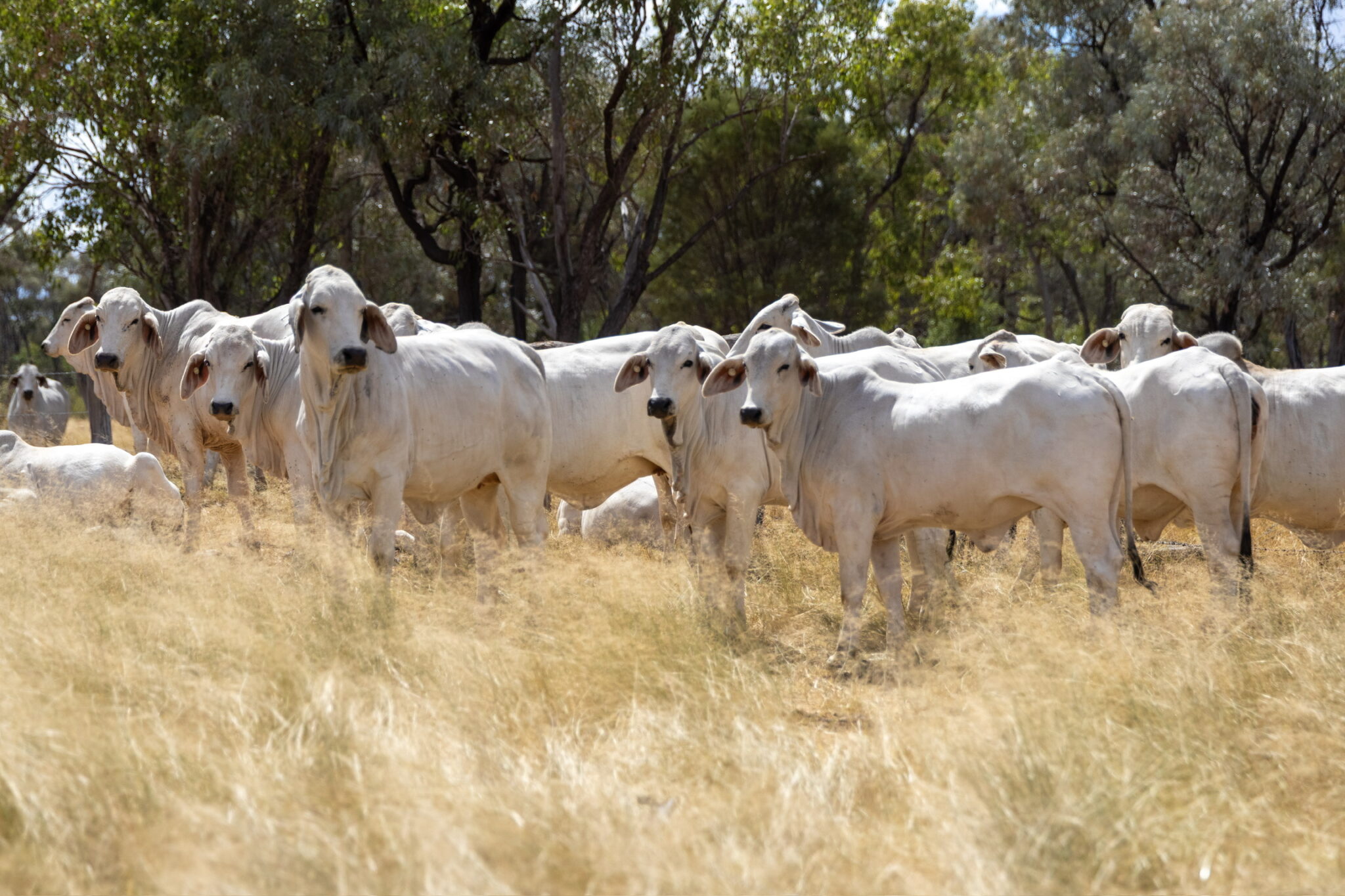
Brahman backgrounder steers
Market Indicators
90CL (AU c/kg): 1307
A$ / US: 70.50c
Livestock Indicators
EYCI (CW): 841
Feeder Steer: 466
Heavy Steer: 436
Medium Cow: 366
Property Spotlight
Calvale, Biloela QLD
“Calvale” is a well-developed grazing property offering reliable water security, productive country and quality infrastructure in a tightly held Central Queensland district.
Located 29 kilometres from Biloela, the property benefits from ready access to meatworks, saleyards, schooling, medical services and retail facilities.
The holding comprises fertile creek flats, improved undulating Bloodwood and Ironbark forest country and steeper ridge country, with well-established pasture development. Water security is underpinned by the Awonga–Callide Pipeline allocation, supported by dams and semi-permanent waterholes on Callide Creek.
Significant investment has been made into fencing, water development, pasture improvement, access roads, yards and structural improvements, resulting in a well-presented and practical grazing operation.
The modern homestead, constructed in 2019, provides comfortable open-plan living with elevated rural views, while a renovated cottage offers additional accommodation.
“Calvale” represents a genuine turnkey grazing opportunity in a proven Central Queensland district.
Producer / Rural Business Spotlight
“The Gums” – Simmons Family
Located in the high country of New South Wales, The Gums is a family-owned grazing property that has been shaped by decades of experience, learning and innovation.
Owned by Jason and Naomi Simmons, the business reflects a long-term commitment to improving land productivity through thoughtful grazing management and a deep understanding of soil health.
What began as a traditional sheep and cattle operation has evolved into a progressive system focused on balance, resilience and sustainable outcomes, not only for The Gums, but for grazing enterprises across Australia.
“The Gums has been in the Simmons family since the early 1960s. For much of that time, the property ran sheep and cattle under a traditional set-stocked system. Like many farms of that era, major improvements focused on clearing, burning, and the use of chemical fertilisers.
When I took over management of the farm in the late 1990s, it became clear that several long-term issues needed addressing. Seeking new ideas, I attended a Holistic Management course, a turning point in my thinking. We immediately transitioned to rotational grazing, which delivered dramatic results. Within the first year, we doubled our carrying capacity and were able to maintain it.
However, over time it became apparent that grazing management alone was not enough. While we had ample pasture, stock were not finishing as well as expected. The issue was not quantity, but quality — the nutritional value of the pasture itself. The underlying problem lay in soil balance.
I consulted widely with agronomists and trialled a number of conventional recommendations, but the results were underwhelming. This led me to the work of Dr William Albrecht, an American soil scientist from the 1930s who studied the chemistry of soils under the most productive crops across the United States. Albrecht identified specific mineral balance ratios required for soils to perform at their best, forming a foundation for what he described as truly healthy soil.
Since then, I have continued to study and attend courses covering soil chemistry, soil biology, hydrology and animal nutrition, applying these principles at The Gums. As a result, we continue to lift carrying capacity and consistently produce larger, healthier weaners each year.
Today, we also manage two other local grazing properties running commercial cow herds. By applying the same management system, both properties are showing marked improvements in vitality, with rapid gains in productivity and overall resilience.
We also provide a soil testing and consult service to clients all over Australia who want to maximise productivity.”
— Jason & Naomi Simmons
Contact Jason on 02 6775 3728 if you would like to know more.